Loading...
Serving Post Falls, ID and surrounding areas. (208) 981-9130
Cracked mortar, spalling bricks, and shifting chimneys get worse every freeze-thaw season. We diagnose the real problem, match your existing brick and mortar, and make the repair that holds.
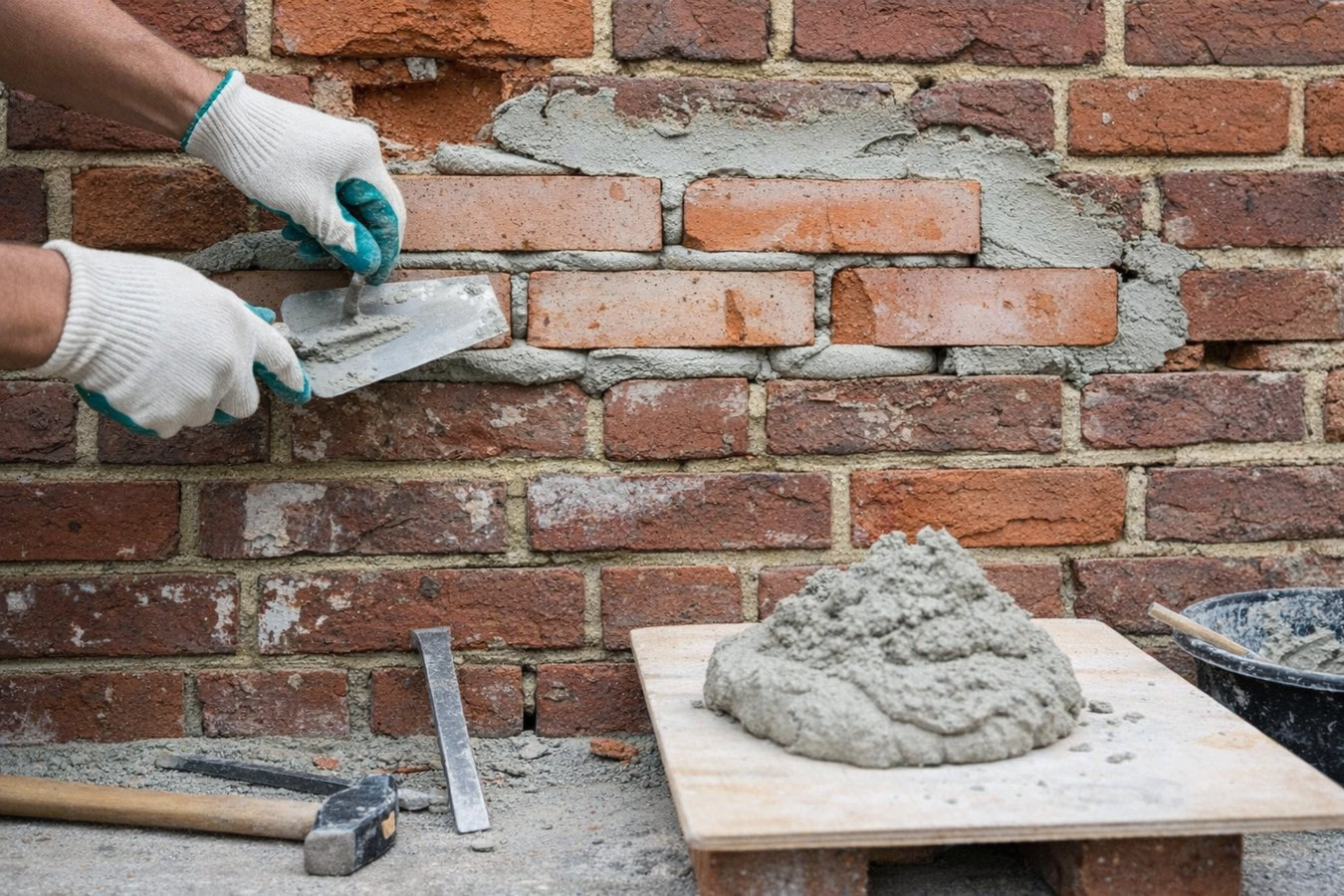
Brick repair in Post Falls addresses failing mortar joints, cracked or spalled bricks, and shifting chimneys - most straightforward jobs take one to three days and cost between $500 and $3,000 depending on how much material needs to be replaced. The brick itself rarely fails first. It is the mortar between the bricks that wears out, and when it goes, water gets inside the wall. In a Post Falls winter, that water freezes, expands, and damages the brick faces - a process called spalling that gets harder to ignore with every passing season.
The good news is that most brick problems start as mortar problems, which are easier and less expensive to fix. When you also need joint restoration across a wider area, that work is called tuckpointing, and we often combine the two on the same visit when it makes sense.
The Brick Industry Association publishes technical standards for brick repair and mortar matching - the same guidelines experienced masons follow to make sure a repair holds rather than creates new problems.
These signs are visible without any tools. If you spot more than one of them, the damage is already active and worth addressing before the next winter.
Run your finger along the joints between your bricks. If the mortar feels soft, crumbles easily, or you can see gaps where it has fallen away, it needs to be replaced. In Post Falls, this kind of wear often shows up most visibly in spring, after a winter of freeze-thaw cycles have worked on the joints.
A crack that zigzags diagonally across multiple bricks along the mortar joints is a more serious sign than a straight hairline crack. Given the sandy, shifting soils common in the Rathdrum Prairie area, this pattern in Post Falls should be looked at by a mason - not assumed to be cosmetic.
That white powder on your brick is called efflorescence - water moving through the wall carries minerals to the surface. It tells you water is getting in somewhere, and in a northern Idaho winter, water inside a brick wall leads to cracking and spalling. The stain is the symptom; failing mortar joints are almost always the cause.
When the face of a brick starts to flake off in layers - a process called spalling - it means water got inside the brick and froze. In Post Falls, where temperatures can swing above and below freezing repeatedly through the winter, spalling can progress quickly once it starts. Each winter that passes makes it more extensive.
We handle everything from straightforward mortar joint restoration to individual brick replacement and chimney repair. The starting point for every job is an honest assessment: we look at the bricks themselves, test the existing mortar, and tell you whether the problem is cosmetic or structural before we touch anything. We also flag upfront if the scope requires a permit from the Post Falls Building Department - you should never find that out after the work is done.
On the same visit, if we notice wider sections of mortar failure across the wall, we can discuss driveway pavers or other masonry work that may also need attention around your property. Getting multiple surfaces looked at in one visit saves time for everyone.
The most common brick repair - deteriorated mortar is cut out to a proper depth and replaced with a matched mix. Right for walls where the bricks themselves are still solid.
When a brick is cracked, spalled, or has shifted, we remove and replace it with a matching brick. Getting the color and texture right is as important as the structural fix.
Chimneys take the most exposure of any masonry on a home. We repair loose, cracked, or missing bricks from the base to the crown and assess the cap and flashing at the same time.
Diagonal cracks along mortar joints are often tied to soil movement. We repair the crack and help you understand whether the movement is ongoing or has stabilized.
Post Falls sits in an area where winter temperatures can swing above and below freezing multiple times in a single week. Every one of those cycles pushes water a little deeper into any open mortar joint. The sandy, gravelly soils of the Rathdrum Prairie also shift with seasonal moisture changes - which is why diagonal stair-step cracks are so common on brick walls and chimneys here. A crack that looks minor in October can open significantly by April. The housing stock built during Post Falls rapid growth in the 1980s and 1990s is now reaching the age where mortar joints are at or near the end of their natural lifespan.
We regularly work in Spokane and Rathdrum where the same climate and soil conditions apply, so we understand what brick repair in this region actually requires. Late spring and early fall are the best windows for this work in the Post Falls area - after the last hard frost but before late summer wildfire smoke, which can affect how mortar cures.
Get in touch by phone or the contact form and we will respond within one business day. Let us know where the damage is and roughly how large the area looks - a photo is helpful but not required.
We walk the damage with you, check whether it is a mortar issue or a brick issue, and assess whether a city permit is needed. You receive a written estimate before any work is agreed to.
We cut out damaged mortar, replace any bricks that need it, and match the new mortar in color and strength to your existing wall. The work area is cleaned before the crew leaves.
We walk the finished work with you and explain what to watch for during the curing period - typically 24 to 48 hours before the wall gets wet. Most repairs reach full strength over the following three to four weeks.
We respond within one business day. Written estimate, no obligation, no upsell.
(208) 981-9130We test your existing mortar before mixing new material. Mortar that is too hard for older brick forces stress into the brick faces instead of the joints - which is how a straightforward repair turns into a spalling problem. Matching the mix correctly is the single most important part of any brick repair.
The sandy, gravelly soils of the Rathdrum Prairie shift with seasonal moisture changes - we have seen the diagonal crack patterns this causes on walls across Post Falls. Knowing whether a crack is cosmetic or structural requires understanding the local ground conditions.
Routine tuckpointing usually does not need a permit. But if the repair involves structural work - rebuilding a chimney section or replacing a significant number of bricks - the City of Post Falls requires one. We flag this before we start and pull the permit ourselves.
We are registered with the Idaho Division of Building Safety and carry liability insurance and workers compensation. If something unexpected happens on your property, you are covered. A contractor who cannot show you their license and insurance is not a contractor you want on your home.
You can verify contractor licensing in Idaho through the Idaho Division of Building Safety. We are on record there, and we carry the insurance required to protect your property. Every brick repair job we do is backed by a written estimate and a walkthrough when the work is finished.
If your driveway surface has shifted or cracked alongside your brick damage, paver installation gives you a durable surface that handles Post Falls freeze-thaw cycles well.
Learn MoreWhen the bricks are sound but the mortar joints across a wider wall section have deteriorated, tuckpointing restores those joints systematically rather than spot by spot.
Learn MoreEvery winter that passes with open joints or cracked bricks makes the repair larger and more expensive - reach out today and we will get a written estimate in your hands.